
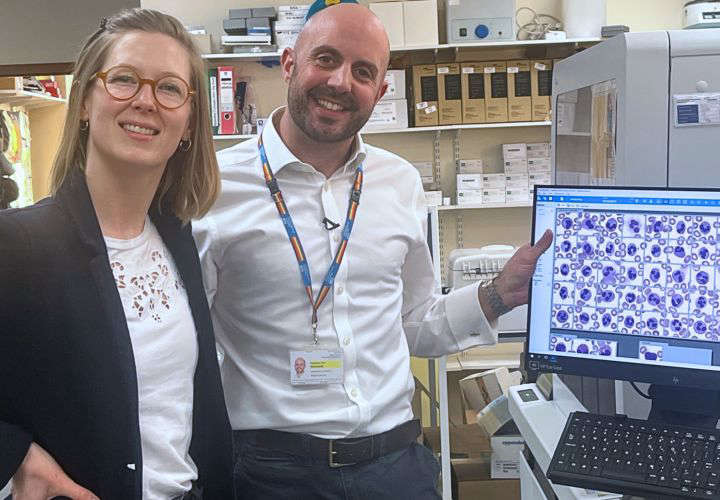
A pilot project to help GPs spot early warning signs of cancer from routine blood tests has now rolled out to 60 GP practices in Devon.
Led by the University of Exeter and the Royal Devon University Healthcare NHS Foundation Trust, the High or Elevated Level of Platelets (HELP) Flag study involves a new way of analysing routine blood tests taken by GPs.
At the Royal Devon alone, 500,000 of these tests are analysed each year. These tests include a count of platelets – the blood cells that help the body form clots to stop bleeding. A high platelet count can sometimes be an indicator of certain types of cancer, including lung and bowel cancers.
Levels of platelets vary depending on age, and whether a person is male or female. The Exeter team has developed an algorithm to apply more personalised thresholds, to more accurately pick up who might be at risk.
Funded by the SBRI NHSE Cancer Innovation programme and supported by the National Institute for Health and Care Research Biomedical Research centre (NIHR BRC) and the NIHR HealthTech Research Centre in Sustainable Innovation (HRC), the project was initially trialled in five GP practices across Devon, and has now been rolled out more widely. The 60 practices are in Exeter, East Devon and North Devon, with Liverpool the first pilot project outside the South West.
Professor Sarah Bailey, of the University of Exeter and Project Lead said: “It’s really exciting to see more GP practices coming on-stream, to this new way of analysing the blood tests they’re already taking. Our project will give more accurate information on blood count for more patients, which could tell whether they’re at elevated risk. We know that catching cancer early can save lives, and we hope this may one day be expanded across the NHS.”
The initial pilot is expected to run for two years, including a staged expansion in specific regions. If rolled out across NHS, experts believe it could flag 10,000 patients a year who have a raised blood platelet count before their cancer diagnosis.
Professor Tim McDonald, Clinical Director for Pathology at the Royal Devon University Healthcare NHS Foundation Trust, said: “This research really is a win-win for improving cancer diagnosis. It’s actually very simple for us to add to the routine tests we’re already conducting, and we hope it will mean that GPs can catch cancer in some patients earlier, which we know leads to the best outcomes.”
The initial pilot project was funded by philanthropist David Walton. The University of Exeter, the Peninsula Cancer Alliance, and Royal Devon NHS are conducting an evaluation via the NIHR Exeter BRC and Exeter HRC, to analyse the extent to which implementing the new test triggers earlier diagnosis warnings, and to roll out the approach further if successful.
 Rural affairs lead appeals to Chancellor for more help for farmers, rural businesses and communities
 M5 sliproad and Bridge Road projects shortlisted by Government
 Dangerous predator jailed
 Tate brothers seized cash will help fund male allyship to challenge misogyny and violence against women and girls