
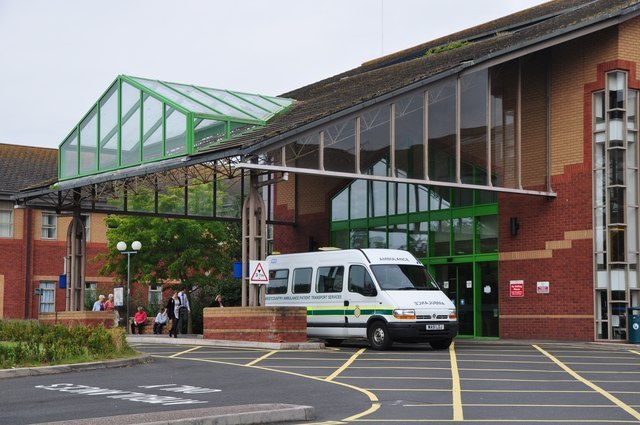
Devon’s health service has admitted it is struggling to afford redundancies it needs to make as part of record cost-saving targets due to its “dire” financial state.
The NHS in Devon has been tasked with trying to find nearly £256 million in cost savings as part of efforts to haul it out of ‘special measures’.
Although progress is being made, the county’s health service has said it cannot afford redundancies “particularly at Royal Devon University Hospital” in Exeter, and so is trying to pursue a policy of so-called mutually agreed resignations.
The comments came at Devon County Council’s health and adult care scrutiny committee earlier this month, prompting its chair, Councillor Jess Bailey (Independent, Otter Valley), to call the situation “dire”.
Kirsty Denwood, interim chief financial officer for NHS Devon’s integrated care board (ICB), said the cost-reduction plan had been acknowledged as “high risk” from the outset, but that the various individual trusts were taking action to help reduce outgoings with progress now visible.
But, Ms Denwood acknowledged a “big element” of the plan related to “workforce reductions” and this was proving challenging.
“A big element of the savings plan, particularly in the Royal Devon University Healthcare Trust [in Exeter], is work force delivery, with lots of that being in corporate services, but as there is no access to funding for redundancies it has been really hard to take those costs out and staff out.
“There have been schemes offered, like mutually agreed resignations, but the take-up has been a lot lower than anticipated so getting the workforce numbers down where required has been a bit of a challenge.”
Cllr Bailey said the situation with the county’s health service provided some worry.
“What concerns me is the potential that the NHS may be unable to make timely payments to suppliers,” she said, also questioning whether there could be “operational difficulties” given the major cost-saving drive.
The NHS told the committee that, technically, if it couldn’t take all the costs out it needed to, then it could run out of cash, albeit it had been given permission from NHS England to apply for cash as part of a support scheme.
“If you can’t take all the costs out that you need to then you are going to run out of cash,” Ms Denwood added.
“But there is a process now, agreed with NHS England, where we can apply for cash.”
She said the health service nationally required trusts to have a certain number of working days’ worth of cash, suggesting that where there were shortfalls, these could be made up through applications to NHS England.
Councillor Stuart Rogers (Conservative, Ashburton & Buckfastleigh) asked where the “biggest risk” for NHS Devon was.
The NHS said it thought the Royal Devon University (RDU) hospital – formerly named the RD&E – presented the “biggest risk”, partly due to problems reducing staff levels and other cost-related challenges.
“There is a lot of focus on that on behalf of the board and committees,” said Libby Ryan-Davies, deputy chief executive at NHS Devon.
“We are working with regional colleagues to deliver the plan.”.
The committee also heard the RDU was “behind” in its elective or planned care, meaning patients were “waiting longer than we would want”.
Councillor Dermot McGeough (Conservative, Northam) echoed the view that the situation with the county’s health service looked “dire”.
“The NHS here is financially in trouble and trying to cut the bare bones out of the service, and that will hit the residents of Devon,” he said.
“Devon County Council gets such a small amount of funding from the NHS and so I feel there will be more strain on Devon.”
Cllr McGeough added that he feared the council tax precept could rise to make up for NHS cost cuts, but county officers suggested that wouldn’t happen because the portion of health funding secured through council tax was targeted solely at adult social care.
A spokesperson for the Royal Devon said: “Like many NHS providers nationally, the Royal Devon ran a mutually agreed resignation scheme (MARS) early in the financial year offering eligible colleagues the opportunity to resign voluntarily with some financial support.
“This was a nationally approved scheme operated within the terms agreed by the NHS Staff Council. A small number of colleagues have proceeded with this offer.
“Along with the rest of the NHS, we are experiencing a significant financial challenge this year and need to reduce our costs in line with the funding available, and the MARS scheme is a cost-effective way to do this.”
 Changes to recycling from later this month say government – but most householders will see little change
 Plans set out to improve short breaks support for disabled children and families in Devon
 Devon County Council to address housing need
 Hospiscare smashes fundraising record to ‘keep care at home’.