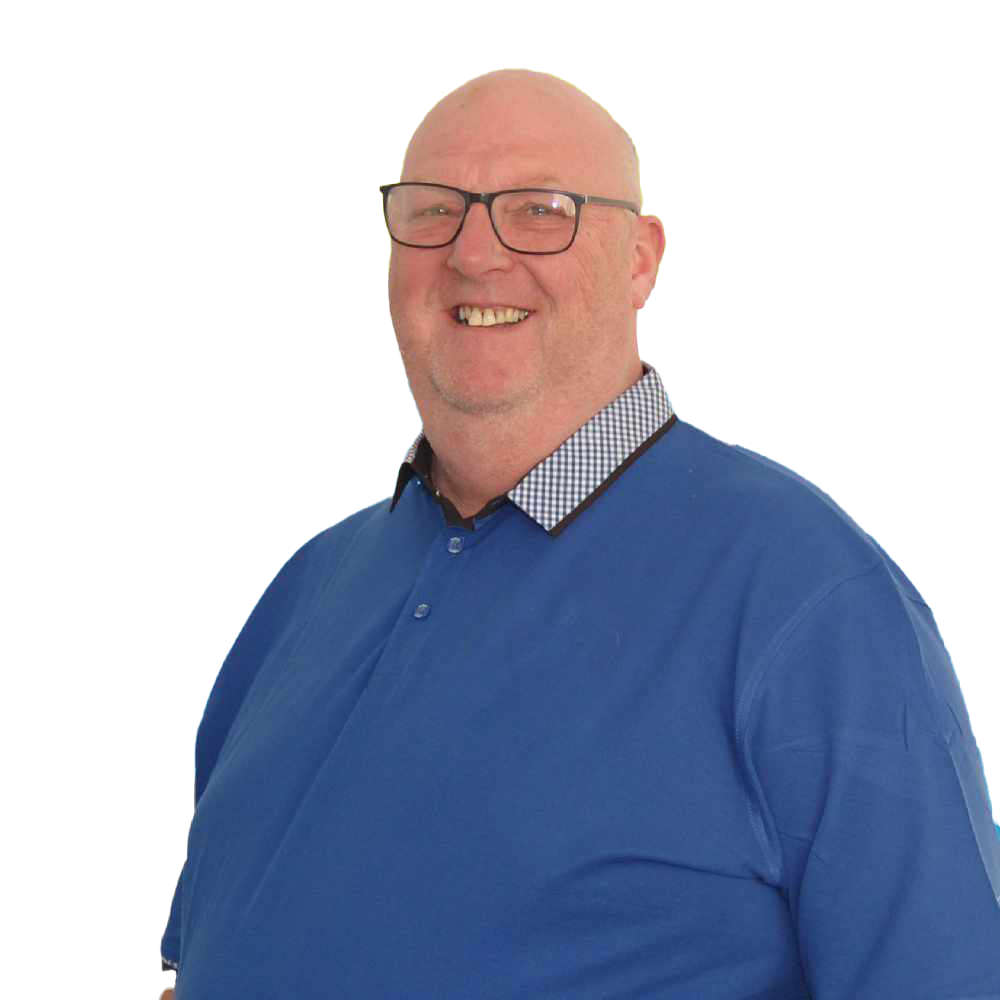

Friction has emerged at a Devon council over votes linked to a major overhaul of the way local government will be reconfigured.
East Devon’s leader, Councillor Paul Arnott (Liberal Democrat, Coly Valley) initially championed a proposal for how Devon’s councils should be reshaped that was favoured by various district councils.
But when he became deputy leader of Devon County Council, he took on a cabinet role that involved promoting that authority’s preferred suggestion, which ended up being different to the model East Devon District Council backed.
That led to Cllr Arnott abstaining from each council’s vote over which model the respective authority wanted to tell the government it thought would be best.
The move has ruffled one of East Devon’s opposition parties, with Councillor Mike Goodman (Conservative, Sidmouth Sidford) claiming this means Cllr Arnott has “not made his position clear”.
Cllr Arnott has hit back, stating that the votes at all of Devon’s councils around local government reorganisation were purely indicative of a preference rather than confirming the implementation of a specific plan. That’s because the government is going to choose which of the reorganisation plans it wants to implement out of the ones Devon’s councils have submitted, or could even institute something entirely different.
The situation throws up the issue of so-called ‘twin hatters’ – councillors who hold positions on two different councils. Devon County Council’s cabinet has three members – including Cllr Arnott – who also lead district councils. Interestingly both of those – Councillor Richard Keeling (Liberal Democrat), the leader of Teignbridge District Council and Councillor Dan Thomas (Liberal Democrat), the leader of South Hams District Council – voted for both options at their respective councils.
“Cllr Arnott has frequently spoken about how important it is to be open and transparent, and this is something I agree with him on,” Cllr Goodman said.
“However, at East Devon District Council’s meeting to discuss local government reorganisation, even though Cllr Arnott was in the building, he did not attend the meeting.
“In March, he proposed the 4-5-1 model but in November, in his position at Devon County Council, he proposed the 9-1-1 model.
“And unbelievably Cllr Arnott abstained from his own motion [at Devon County Council] – I have never seen that happen before in local government.”
Cllr Goodman said he had tried to ask what Cllr Arnott’s view was on the 4-5-1 proposal at East Devon’s meeting on the subject, but was “told I could not ask this”.
“Members and residents will wonder why he has not made his position clear,” Cllr Goodman added.
Cllr Arnott said the fact East Devon and Devon County Council put forward differing options “is in fact a positive for the people of the district”.
“Both ideas, in my view, are the only ones advanced which genuinely consider all of Devon.”
Some proposals submitted by other Devon councils, such as Plymouth and Exeter, suggest expanded boundaries for those two authorities and then a ‘rural and coastal’ council for much of the rest of Devon. Most opponents call the latter part of those proposals unsustainable.
“Anyone paying attention would have seen my repeated public statements that only 4-5-1 and 9-1-1 observed the key exam question, which was that any proposal was required to consider and offer proof that it could work for all the authority areas across Devon.
“I spoke in praise of both proposals at Devon’s full council earlier this month (December), and have done so consistently, including in meetings with the Devon Association of Local Councils and others.”
Cllr Arnott said the proposals from Labour-led Plymouth and Exeter did not consider the whole of Devon because of the suggestion of the “obviously non-viable” rural and coastal council.
“Despite [Cllr Goodman’s] attempts to personalise this in council and in the press, I am proud that the two councils I have been elected to have acted impeccably in the past six months to devise proposals which consider the common good of all Devonians, and that we have done so in a situation where both the Conservatives and Labour have pursued ‘I’m alright, Jack’ policies and proposals,” Cllr Arnott added.
Cllr Keeling said he voted for the 9-1-1 proposal at Devon County Council but also the 4-5-1 proposal in his capacity as Teignbridge leader.
“It has been difficult for twin hatters but I’ve always been very clear on my position,” Cllr Keeling said.
“We looked at all the options at Teignbridge and it came down to 4-5-1 being supported but we said at the executive meeting that 9-1-1 was viable.
“Of course, the important point to make is that we don’t actually decide anyway, as that’s down to the government.”
Cllr Keeling said Teignbridge had also urged the government to ensure Dartmoor National Park remained within one single unitary council boundary, adding that it included in its submission the acknowledgement of 9-1-1 as a “viable option” for consideration by the Secretary of State.
Cllr Thomas, who did not respond to a request for comment, voted for the 4-5-1 option at the South Hams special meeting on the issue in November, and at Devon County Council’s meeting, endorsed the 9-1-1 proposal.
At Devon’s meeting, he said: “Although I am a twin-hatter, I am very clear as to what my responsibility is while I’m here.
“I’m a county councillor and I am working in the best interests of the people in Devon, and as such I’m very happy to support the plan.
“I do so by echoing the remarks about funding, though, as I have real worries about that, and unless it is considered, then [local government reorganisation] becomes an exercise in deckchair rearrangement.
“So my message to the government is that we are very happy to follow the rules and put in bids that work the best, but in return they should be thinking about how to fund local government effectively in future for us.”
 Changes to recycling from later this month say government – but most householders will see little change
 Plans set out to improve short breaks support for disabled children and families in Devon
 Devon County Council to address housing need
 Hospiscare smashes fundraising record to ‘keep care at home’.