
Railway stations across the South West could unlock 238,000 jobs and £14.25 billion by 2035, according to new research. A report by Development Economics highlights the “Rail Catalyst Effect”, showing stations drive investment, opportunity and growth.
- New research reveals railway stations across the South West are regional growth engines driving jobs, housing and investment across the UK.
- Analysis of eleven South West stations shows development has delivered 3,500 new homes, 4,500 jobs and £328 million in economic value since 2020.
- By 2036, new stations could unlock 238,000 jobs and £14.25 billion for communities across the South West.
- Findings underscore need for continued rail investment to generate employment, unlock prosperity and power the UK’s social and economic future.
Railway stations across the South West could unlock 238,000 jobs and £14.25 billion by 2035, according to new research published today.
The findings revealed in a new report from leading economic research consultancy Development Economics show how stations across the South West are anchors for growth. The report reveals the "Rail Catalyst Effect": how stations act as catalysts for investment, opportunity and prosperity across the South West and the wider UK.
As new figures show unemployment in the UK sits at a five-year high of 5.2%1, the report makes the case that continued investment in rail supports regional economies and unlocks future prosperity for communities across the UK.
Powering regional prosperity
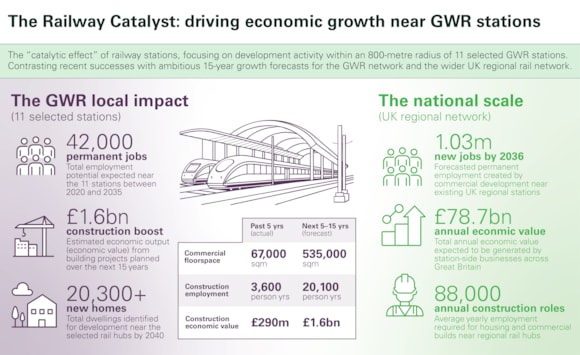
The research finds that development around just 800m of railway stations in the South West could support more than 230,000 jobs by 2036, generating £14.25 billion for the region’s economy.
As part of this, new stations in the South West, such as Okehampton Interchange and Marsh Barton, are projected to generate 1,500 permanent jobs and around £112 million each year over the next decade.
The research also looks back on how rail investment has helped communities grow and thrive. Across just nine South West existing stations, development within 800m distance over the past five years has delivered 3,500 new homes, 67,000 sqm of commercial space, supported 4,500 jobs and delivered £328 million annual economic value.
Mark Hopwood, Managing Director, GWR, said:
"The findings of this report are clear: the railway, its stations, and the trains that serve them are powerful drivers of economic growth, community prosperity and regeneration. Across our network, development around the railway is delivering thousands of homes, new commercial space and thousands of jobs, generating hundreds of millions of pounds in economic value for the communities we serve.
“I’m pleased to see the railway recognised as a key part of the Government’s plans to support the continued growth of towns and cities across the country.”
Railways: a national growth engine
The research finds that across the Great Western Railway network, railway stations are projected to create 238,000 jobs and £14.25 billion in annual economic value by 2036, much of it in high-skilled sectors such as professional services and technology, bringing opportunity closer to where people live.
When applying the same model across the UK’s regional rail network, railway stations could support more than 1 million permanent jobs by 2036, generating £78.7 billion for local and regional economies.
Rebecca Smith MP, member of the Transport Select Committee and MP for South West Devon:
"Rail connectivity is vital to unlocking economic growth across South West Devon, and this report rightly highlights the powerful role that stations can play in supporting jobs, housing and thriving local communities. That’s why I have been actively working with local partners, rail campaign groups and ministers to push for practical improvements to our network. If we are serious about unlocking rail’s full potential for growth, we must ensure communities like ours in the South West are included in that investment.”
Driving social value
Beyond the economic impact, railway stations across the South West play a vital role in driving social mobility and widening opportunity, particularly for those without access to a car, which accounts for around 22% of households in England1.
With over 1.6 billion passenger journeys made each year2, rail is enabling access to opportunity at scale, shaping where people can work, learn and build their futures.
Olly Glover MP, Liberal Democrat Member of Parliament for Didcot and Wantage and Spokesperson for Transport:
“It is great to see GWR appraising the economic impact of both rail’s workforce and wider contribution. For too long, the UK has viewed rail and public transport in isolation, and has failed to recognise the enormous economic contribution it makes. This report is an important step in changing that, and I hope will pave the way for the investment in existing and new railways and stations across the GWR area that communities are clamouring for, including Grove and Wantage in my constituency.”
 A more local way of supporting families during the EHCP process
 What is meningitis? Symptoms, risks and how to protect yourself
 New ‘sheep worrying’ laws backed by council and police
 Devon to receive £1.3 million extra support as global conflict drives up heating oil costs