
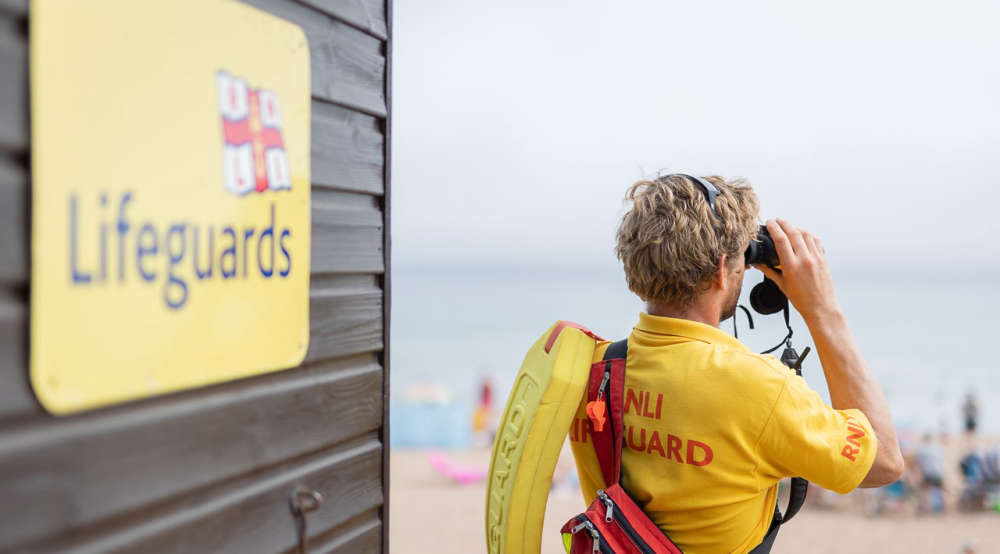
The Royal National Lifeboat Institution (RNLI) has reached 25 years of keeping beaches safer by delivering a world class lifeguard service to coastal communities around the UK. As the charity marks this milestone, its lifesavers are training ahead of the 2026 season and the Easter school holidays.
Since 2001, RNLI lifeguards in the south west have saved 1098 lives and aided 167,592 people through rescues, interventions and delivering casualty care. They have responded to 185,954 incidents and carried out more than 22M preventative actions.
Back in 2001, the charity took action when stark figures showed 200 lives were lost on UK beaches. Lifesaving clubs were already patrolling but not on the scale required. The RNLI wanted to provide a solution and established a co-ordinated rescue service. Working with lifesaving clubs and beach owners, the RNLI piloted 15 lifeguarded beaches in the south west* and the results spoke for themselves as 20 lives were saved in the first year.
It led to an official service being formed and the service has since expanded to reach over 90 lifeguarded beaches in the region and 245 nationally. Safety literature information and warning signs were also developed for beaches so visitors knew what dangers they may encounter and how to keep themselves safe.
Year on year the RNLI’s lifeguard service has grown through working closely with partners, and now there are over 245 beaches across the UK and Channel Islands being patrolled, meaning it’s the largest lifeguard service provider in the UK.
Peter Dawes, RNLI Lifeguard General Manager, said:
‘Thanks to RNLI lifeguards our beaches are safer places, so we can enjoy our time at the coast and return home safely at the end of the day. Around 95% of a lifeguard’s work is prevention. They keep beachgoers safe by educating them about water safety and spotting the dangers before accidents happen.
‘RNLI lifeguards past and present have kept millions of beach visitors safe over the past 25 years and will continue to do so for years to come. If you are planning a visit to the coast this summer, please remember to visit a lifeguarded beach.’
If you are heading to the coast this Easter, try to find a lifeguarded beach if possible. Your nearest RNLI lifeguarded beach can be found here - https://rnli.org/find-my-nearest/lifeguarded-beaches.·
The RNLI is urging anyone visiting the coast this summer to make sure they keep themselves and their families safe by being water smart and following their beach safety advice.
-
Visit a lifeguarded beach and swim between the red and yellow flags.
-
Check the weather forecast, tide times and read local hazard signage to understand local risks.
-
For activities like paddleboarding or kayaking we recommend you wear a wetsuit, buoyancy aid or lifejacket and carry a means of calling for help in a waterproof pouch and keep it on you. Tell someone what you are doing, where you are going and when you expect to return.
-
If you are going open water swimming, use a wetsuit to keep you warm, wear a bright coloured swim hat and take a tow float to store personal items including a phone for emergencies.
-
If you fall into the water unexpectedly, FLOAT TO LIVE. Fight your instinct to thrash around, lean back, extend your arms and legs, and Float.
-
In an emergency dial 999 and ask for the Coastguard.
 Devon residents in broadband ‘not-spots’ urged to act before looming deadline
 Spring brings higher risk from both farm infections and ticks, UKHSA advises
 Railway to unlock 238,000 jobs and £14bn for South West by 2036
 A more local way of supporting families during the EHCP process