
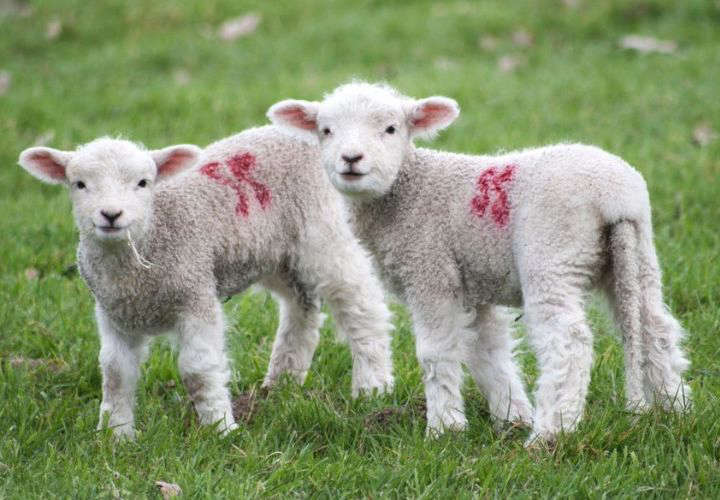
Families living in or visiting the South West who are also planning a trip to an open farm or farm attraction this Easter half-term, are being urged to wash their hands thoroughly with soap and water after touching animals, and to remain tick aware when spending time outdoors.
Data from the UK Health Security Agency (UKHSA) shows that the majority of farm-linked illness outbreaks occur in spring. In 2024, UKHSA investigated 24 outbreaks of cryptosporidiosis linked to lambing events or petting farms, 21 of which (nearly nine in ten) took place between March and May – coinciding with the Easter holidays and spring half-term, when farm visits are most popular.
Farm animals naturally carry bacteria and parasites, including Cryptosporidium parvum and E. coli O157. These germs are invisible to the naked eye and can be passed to humans through direct contact with animals, their droppings, or contaminated surfaces such as fences and gates. Young children, pregnant women and immunocompromised individuals are the most vulnerable, but anyone can become unwell.
UKHSA is also reminding visitors to open farms that hand gels or wipes are not a substitute for washing hands thoroughly with soap and warm water after touching animals or visiting a farm.
Jennifer Taylor, Consultant in Health Protection at UKHSA South West, said:
"In the South West, we are fortunate to have many farms that people can visit. Farm visits are enjoyable and educational, particularly for children, but they do carry a risk of picking up infections from animals or the farm environment. Some of these infections can be more serious for young children and pregnant women.
“Infections can be picked up from the animal's body, its droppings, or from areas where animals are kept or have recently been. If germs are on your hands, you could accidentally transfer them to your mouth without realising, as hands look clean even when they are not.
“Washing your hands thoroughly with soap and warm water immediately after touching animals or their surroundings, before eating, and at the end of your visit is the most effective way to reduce the risk of infection. Hand gels or wipes are not a substitute for proper hand washing. Farms provide hand washing facilities, so we encourage people to make use of these to ensure the only thing you take away from your visit is happy memories.”
“It is also important to clean footwear or pushchair wheels that might have become soiled. Once you’ve finished cleaning them, remember to wash your hands thoroughly again."
Annabel Shackleton, Open Farm Sunday Manager at LEAF (Linking Environment And Farming), said:
"We want people to continue enjoying and learning from farm visits safely. The key is thorough handwashing with soap and running water immediately after touching animals or their enclosures, and always before eating. Adults should supervise children to make sure they wash properly every time."
How to stay safe during a farm visit
Always:
- Wash hands thoroughly with soap and water for at least 20 seconds after touching animals, fences or surfaces in animal areas, and before eating or drinking
- Eat and drink only in designated picnic areas or cafés
- Supervise children closely to ensure they wash their hands properly
- Clean any soiled footwear and pushchair wheels before leaving, then wash your hands again
Never:
- Put fingers in mouths or hands on faces while around animals
- Allow children to put their faces close to animals
- Eat, drink or chew gum while walking around the farm or touching animals
- Return a child's dummy, comforter or toy if it has fallen on the ground until items have been washed thoroughly
- Rely on hand gels or wipes instead of soap and water
What to do if you feel unwell after a farm visit
If you or anyone in your group develops diarrhoea, vomiting or stomach pains within two weeks of visiting a farm, contact your GP or call NHS 111 for advice. If anyone - especially a young child - has blood in their diarrhoea, seek emergency medical care immediately.
Anyone with symptoms should remain away from work, school or childcare until they have been free from diarrhoea and vomiting for at least 48 hours. People who handle food at work, children under 5 years old, and those who work closely with individuals who may be more vulnerable to infection may need to speak to their GP or local health protection team before returning to their usual activities. If diagnosed with cryptosporidiosis, avoid swimming for two weeks after symptoms clear, as the parasite is resistant to chlorine.
Be tick aware this spring
Spring is also the time of year when ticks become increasingly active, and UKHSA is advising people spending time in the outdoors, including farm visits, woodland walks and green spaces, to be tick aware.
Ticks can carry infections, including Lyme disease and, very rarely, tick-borne encephalitis (TBE). Lyme disease is the most common tick-borne infection in the UK, with 1,581 laboratory-confirmed cases reported in 2024. Of these, 239 were in people living in the South West, making tick awareness particularly important for those in and visiting the region this Easter.
Ticks are most active between April and July, though they can be present all year round. They are commonly found in grassy and wooded areas, including farm environments and countryside paths popular with families during the holidays.
To reduce the risk of tick bites:
- Stick to clearly defined paths and avoid brushing against vegetation
- Wear clothing that covers your skin, such as long trousers tucked into socks
- Use insect repellent containing DEET
- Check yourself, your children, your clothing and any pets for ticks after spending time outdoors
- Remove any attached tick promptly using a tick removal tool or fine-tipped tweezers, grasping as close to the skin as possible and pulling upwards firmly and slowly
- Wash the bite area with soap and water and apply antiseptic cream
A common symptom of Lyme disease is a spreading 'bullseye' rash at the site of the bite, which typically develops 3 to 30 days after being bitten, though this does not occur in all cases. Other symptoms include flu-like symptoms such as fever, headache and fatigue, nerve pains, and numbness or tingling in the hands or feet.
If you develop a rash or feel unwell within a few weeks of being bitten by a tick, contact your GP or call NHS 111 promptly.
 RNLI lifeguards in the south west save over 1,000 lives in 25 years on beaches
 Railway to unlock 238,000 jobs and £14bn for South West by 2036
 A more local way of supporting families during the EHCP process
 What is meningitis? Symptoms, risks and how to protect yourself