Devon is aiming to emulate countries like New Zealand after asking whether it could pilot a doctor training programme aimed at making rural and coastal healthcare more sustainable.
Senior figures from the county’s health service said the way training for doctors is designed nationally in the UK makes it more challenging for rural and remote hospitals to remain fully functional.
That’s because doctors tend to specialise in certain areas, meaning even small health facilities need larger numbers of staff compared to comparable remote areas in the likes of New Zealand, Canada, and Australia, where more generalist training means fewer people can cover more disciplines.
“We have got a national training programme for doctors that is designed around large urban centres and is not producing the people with the skills we need to run rural and coastal hospitals,” said Sam Higginson, chief executive of the Royal Devon University Hospital NHS Foundation Trust.
“We need a different conversation about training people with different skillsets and a more generalist approach that is attractive to people as they can operate more independently.”
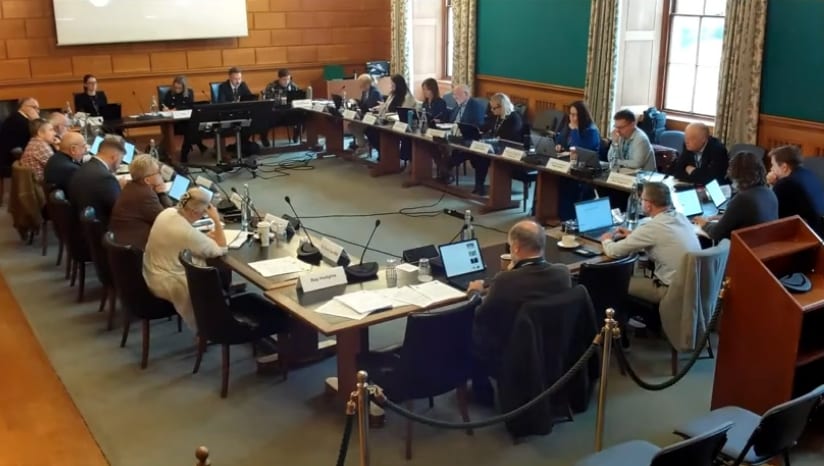
His comments came at Devon County Council’s health and adult care scrutiny committee, which discussed the ongoing suspension of maternity services at North Devon District Hospital.
That ongoing issue was, Mr Higginson said, linked to workforce pressures, with an example being that convention dictates that one person is trained in gynaecology and another in obstetrics, when it would make sense for rural settings to have people trained in both.
“We have asked if we could be a pilot for a training programme that recognises a more generalist approach in more rural and coastal hospitals,” Mr Higginson added in relation to the trust’s efforts to make the case for a different doctor training regime.
The committee’s chair, Councillor Jess Bailey, asked when the trust would hear back from national health officials about this request, but Mr Higginson said it was not known.
Cllr Bailey requested more information about a notional pilot before committing absolute support for it, but Mr Higginson said the trust would pursue it and update councillors.
Peter Collins, a senior officer at the integrated care board that covers Devon, Cornwall, and the Isles of Scilly, added that he was meeting with the postgraduate education team to talk about the desired change in model amid the “increasing national acceptance… helped in no small part by Sir Chris Whitty’s recent report on rural and coastal healthcare, to move away from a single model of delivery.”
Councillor Andy Ketchin (Green Party, St David’s & Haven Banks), who is also a doctor, welcomed the move.
“It works in other countries with rural populations like New Zealand, Australia, Canada, and even rural patches of Wales and Scotland where doctors are trained to do anaesthetics and some operations,” he said.
“The model is proven… yet there has been an approach in the UK to ignore a more generalist service, so it is refreshing to hear from Sam Higginson that he is actively engaging with it and I look forward to seeing how it develops, as it could be a very exciting step forward for somewhere like North Devon.”
Cllr Ketchin added that while high-risk procedures would still warrant treatment in more major centres, there was a range of procedures that could be dealt with by generalist doctors in rural, remote, or coastal areas.
“It’s very pleasing to hear the chief executive of the trust I work at saying things that have never been in the British medical mindset,” he said.
“Let’s make Devon the vanguard of it, and I’d be very happy to be part of the training programme as lots of doctors want to be generalists and not specialists.”
Mr Collins added that comparisons with international data showed around 40 per cent of births do require travel to more developed health centres due to higher risks.
He also said that the changing age profile of people giving birth might need to be a factor in any prospective move to embrace generalist doctors in rural or remote areas.
“As our population ages and women give birth at a later age, there is a bigger incidence of people giving birth with other coexisting health problems, and those are becoming more complicated, so our response needs to make sure the services provided are fit for those women in the future,” he said.
The trust was also asked to report back on the financial impact caused by the suspension of maternity services in North Devon.
 Police appeal for information for wanted Exeter man
 The weather behind the drought: Met Office data shows how dry 2026 has been
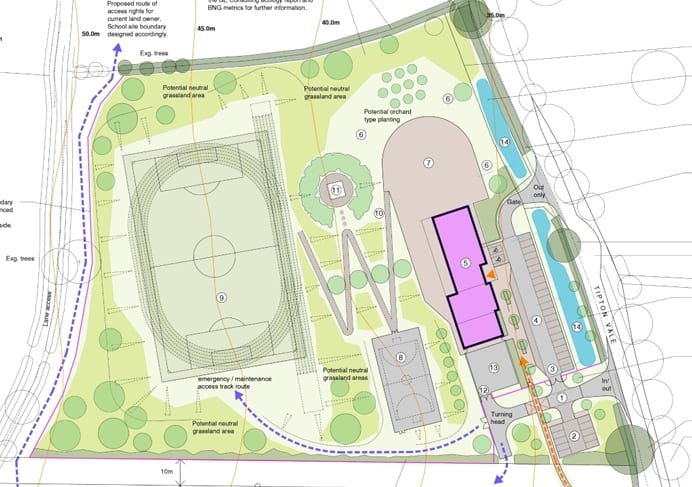 Community urged to rally behind new school plan as current site poses ‘risk to life’
 Newton Abbot hall meeting dismissed as ‘publicity stunt’
 Exeter researchers to explore how neuroscience and AI can support democratic resilience
 Residents’ Survey reveals high levels of satisfaction with life in Exeter
 Devon libraries thrive as membership grows amid planned investment to boost future services
 Much-loved Devon comedian Josh Widdicombe announced as new Patron of Rowcroft Hospice
 Scam warning as criminals exploit digital phone switchover
 Building the next act: new Playhouse takes major step forward
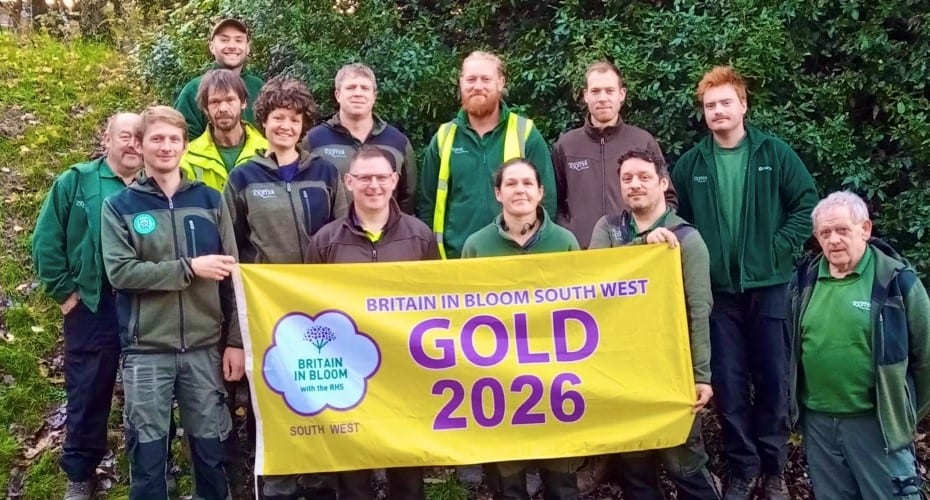 University of Exeter wins Gold in Britain in Bloom South West Awards
 Stay away from the water after drinking
 Father of murder victim backs campaign that helps parents talk about safety
 Your views needed to help shape the Council’s budget for 2027/2028
 Councillor asked to apologise after traffic meeting vote
 ‘Sheep and swords’ honour lined up for Sir Ben Bradshaw