
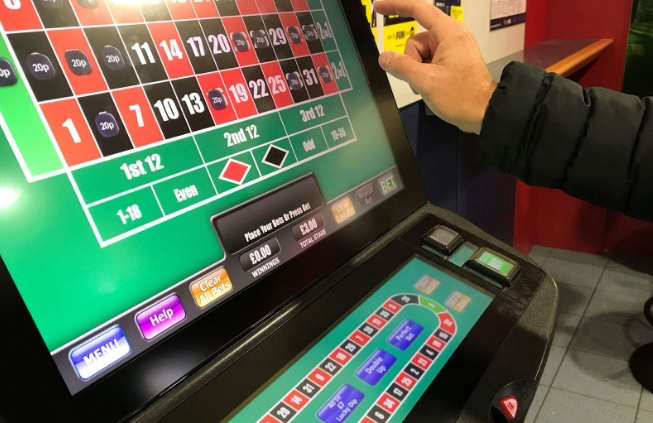
Torbay has more ‘adult gaming centres’ than any other area of Devon, according to new research – all of them situated in areas of serious deprivation.
Only five other councils across the country – all in seaside towns – have more of the slot and gaming machine outlets per head of population.
The figures come from research by the BBC, based on data from the Gambling Commission. The nationwide report has prompted a warning from the charity GambleAware, which says the clustering of adult gaming centres (AGC) in deprived areas is ‘concerning’.
GambleAware says those living in deprived areas are twice as likely to experience gambling harm.
However, the British Amusement Catering Trade Association (BACTA), which represents the gambling industry, said while operators do not target deprived areas, they do ‘invest in high streets that need regeneration’.
The government says it is implementing measures to reduce gambling harms after dozens of council leaders called for a halt to the proliferation of AGCs.
Torbay has 14 AGCs, all but one of them in the 10 per cent most deprived areas in the bay. Teignbridge has 10, all outside the most deprived areas, while Plymouth has six, with four of them in the most deprived areas.
North Devon has five, East Devon four, Exeter three, Torridge two and Mid Devon one. There is no data for the South Hams or West Devon in the report.
Torbay’s 14 AGCs serve a population of 140,000, placing it equal sixth in a table of councils across the country. Great Yarmouth tops the table with 3.9 gaming centres for every 10,000 people. East Lindsey (including Skegness), Hastings, Scarborough and Tendring (including Clacton-on-Sea) are the other authorities ranking ahead of Torbay.
On a par with Torbay are Blackpool and North East Lincolnshire, which includes the seaside town of Cleethorpes.
Oldham Council leader Arooj Shah, who chairs the Local Government Association’s Neighbourhoods Committee, said: “Councils recognise that some people enjoy using bingo halls and adult gaming centres. However, the clustering of these venues and extended opening hours in areas of high deprivation is a concern.
“Licensing authorities currently face significant limits under the Gambling Act 2005, which requires them to ‘aim to permit’ new premises even where an area is already saturated.
“This undermines local decision-making and makes it hard to respond to community concerns.
“Councils know their areas best and need flexible powers to decide whether and where new gambling premises can open—including the ability to refuse applications near schools, treatment services or other sensitive locations.”
Anna Hargrave, transition CEO of Gamble Aware, added: “Our research has shown those in the most deprived areas are two times more likely to experience gambling harms, so we are concerned by the clustering of gambling venues in the most deprived areas of the country.
“While it is important to remember that all forms of gambling carry risks, our research has also shown the high level of harms associated with gaming machines such as slot machines in gambling venues, with one in two people using gaming machines in the past year experiencing “problem gambling”.
“Local authorities need to be given more powers so that they can control the number of gambling venues in their areas. Gambling venues also must ensure they are enforcing self-exclusion schemes to protect people.”
However Allastar Gair, communications director at BACTA, said: “A new AGC does not open without a full licensing process, council oversight and a detailed risk assessment.
“Operators do not target deprived areas. They take on long-term empty units and invest in high streets that need regeneration. Our sector is tightly regulated and we are continuing to raise standards through strengthened systems, better training and visible safer gambling measures.”
BACTA, whose slogan is ‘Delivering the serious business of fun’, says many AGCs have been in the same locations for decades and are a long-standing feature of their high streets, providing supervised low-stake entertainment in a highly-regulated, alcohol-free environment.
A statement continued: “You often see AGCs in areas with a high number of vacant shops. It is not because the industry targets any particular demographic, but because operators have historically been willing to take on premises that others will not. Our members provide jobs, keep units open and bring life back to parts of the high street that would otherwise sit empty.”
 Health chiefs pull plug on Torbay adult social care partnership
 Five people arrested for drink or drug driving in South Devon
 RAF line-up announced for English Riviera Airshow’s 10th anniversary
 Torquay hotel calls for end to ‘punitive’ ban on locals