
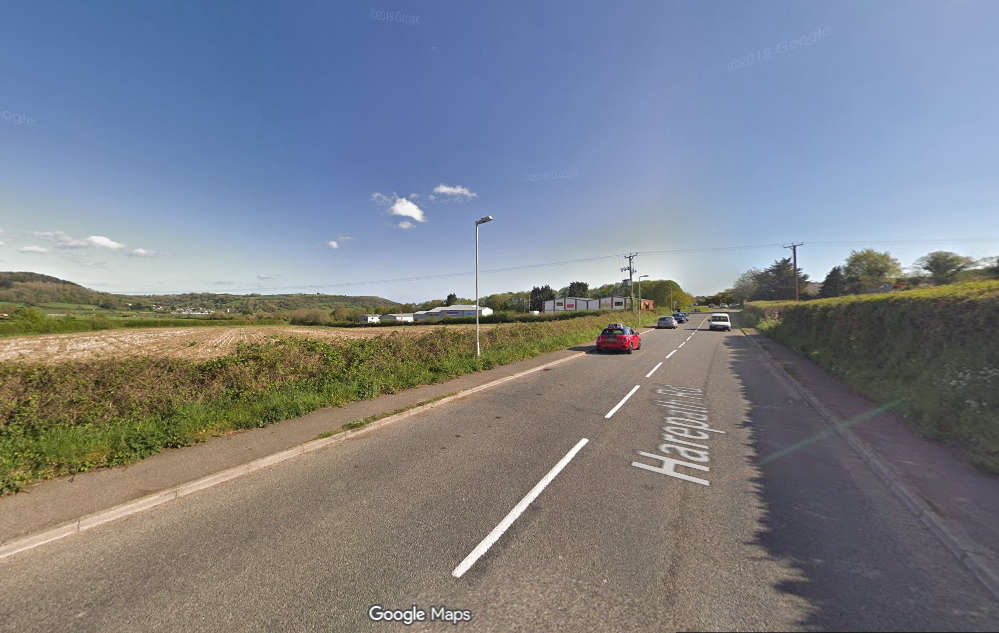
There’s a curious quandary with Britain’s aspiration of building more homes and it’s been perfectly captured in a major Devon district.
The quirk highlighted relates to the fact that governments set housing targets for councils, but even if an authority passes every planning application that comes across its desk, it has no power to make developers build them quickly.
But, if they aren’t built ‘on time’ – in line with government targets – councils get punished for builders not creating new homes fast enough.
It’s a bit like getting detention because your class mate didn’t do their homework.
That’s how East Devon District Council might be feeling now, after narrowly missing its target in a government housing assessment, which means it now needs to build even more homes in the next five years than it originally thought.
But councils aren’t usually ‘the builder’.
Narrow miss
Because it was just 21 homes shy in its housing delivery test, East Devon missed the threshold of building 85 per cent of the homes it had aimed to build in the district in the previous three years.
But the outcome of this supposed misdemeanor – that it has limited, if any, control over – is that it now has to build more homes in the next five years than previously planned.
The council stressed it isn’t being asked to build more homes overall, but needs to build more of its long-term target within five years.
That means it has to add a 20 per cent buffer to its five year housing land supply calculations – equivalent to more than 1,200 homes in that time.
That takes it from 5,635 homes that it needed to build in the next five years to 6,762.
Last year, East Devon did outline long-term aspirations to build or buy 500 social housing properties, but it is not yet clear when it will hit that figure.
During the council’s most recent strategic planning committee, senior planning officer, Ed Freeman, said the authority would be talking to developers to see what it could do to encourage them to build homes more quickly.
“But it is challenging as the housebuilding sector is slowing due to rising costs, which are about to get worse as the Building Safety Levy kicks in from October, which will be an additional charge on new homes as a result of the government trying to address unsafe buildings,” he said.
Mr Freeman added that the government often retorted to councils that hadn’t hit their housing targets to “grant more planning permissions”, but noted that “permissions don’t always equal builds”.
Committee members concurred, with Councillor Olly Davey (Green Party, Exmouth Town) stating there was “nothing much we can do”, while Councillor Kevin Blakey (Independent, Cranbrook), said even ministers had now said the government’s national housing aims were “only a target and sometimes a target gets missed”.
But some developers believe that councils could help in a few specific ways, even if their level of control is limited.
No margin for error
Perhaps unsurprisingly, some of the chagrin from developers comes from the bureaucracy attached to housebuilding.
Graham Hutton, deputy managing director at Newton Abbot-based Baker Estates, which has various sites in East Devon, said the speeding up of legal agreements would be helpful.
“With our site in Seaton, it took 19 months after the resolution to approve our scheme to get the Section 106 (S106) agreement signed,” he said.
“It was approved on the basis the district was short of housing, and they were seeking to secure a faster build-out rate, but that was entirely in the council’s hands.”
Legal agreements can be delayed for various reasons, and the Seaton application had to undergo an investigation into the decision-making behind it, which would have contributed to the delay.
East Devon’s website states that S106 agreements, alongside CIL (Community Infrastructure Levy), are used to secure affordable housing from residential development and essential site specific mitigation, for example, on-site children’s play facilities, from residential and other types of development that are needed to enable development to proceed.
Mr Hutton’s other grumble here is with CIL.
“We have very high CIL charges, and using the development in Seaton again, a development of around 200 units has a CIL bill of £3 million,” he said.
“That’s about £18,000 per market home on the site.”
He said when it was just S106, developments might court charges of £6,000 – £7,000 per house, but that CIL “has had an inflationary impact” on house prices.
“I wonder if there should be a moratorium on collecting it if a council has above a certain amount unspent,” he added.
Again, however, councils like East Devon can allocate money to projects, but those are often being overseen by third parties, over which the district council has no control.
That means CIL balances might technically be high, but the money could have been ringfenced in portions for various projects that haven’t reached the point where money needs to be spent.
East Devon’s most recent update on CIL noted that Exmouth Rugby Club had successfully applied for CIL money, while three payments had been made to date towards the Pinhoe Surgery extension project.
The government states that CIL rates are expressed as pounds (£) per square metre, and that when deciding levy rates, an authority “must strike an appropriate balance between additional investment to support development and the potential effect on the viability of developments”.
Tough environment
Given East Devon overdelivered in 2017/18 with a 149 per cent housing delivery score, which has fallen almost every year since, it would suggest broader issues beyond any council’s control are playing a contributing factor.
Commentary from East Devon stated around half of planning authorities in England fell below the 100 per cent figure, many with the lowest percentages being in southern parts of England and many with the highest in northern areas.
As such, around 114 councils need to produce an action plan – telling government how they will build more homes that they don’t actually build themselves.
The quandary doesn’t look like it will be solved any time soon.
 Fatal collision, B3181 near Cullompton
 Short closures planned for Exe Estuary Trail maintenance near Dawlish
 Reflecting on an extraordinary summer for Fire Service
 Parents urged to make sure children don’t miss important vaccinations
 Chief Constable has the skills to drive change, says Commissioner
 £200,000 awarded to community projects across Teignbridge
 Work on £4m King George V Playing Fields project gathers pace
 TV Licence Savings Stamps refund ends on 31 December 2026
 Last look as ‘ground-breaking’ Exeter city centre shopping mall demolished
 Exe ferryman injured by ‘intoxicated’ e-biker
 Devon MPs blast government tourist tax proposals
 Action pledged as campaigners raise fears at MP’s meeting
 Operation Seabird targets marine crime and protects wildlife
 Public warned over scammers posing as police officers
 Annual housing report shows tenant feedback continues to drive service improvement in East Devon
 Exeter primary school wins innovation competition for fifth consecutive year with “outstanding” Mars habitat project