
Devon & Cornwall Police has received funding from The Road Safety Trust to support an important new research project focused on improving driver safety.
Working in partnership with The Open University, the force will help lead an 18‑month national research programme focused on the mental demands of driving under complex or demanding conditions – situations frequently faced by police and other blue light services drivers.
The findings will be used to develop an evidence‑based training tool designed to inform national police training and safety standards. Insights from the project have the potential to improve safety for all drivers, not just those who respond to emergency situations as part of their job.
The research will examine the varying “cognitive workload” which the brain has to cope with while driving. As driving situations become more complex, and there are competing demands for a driver’s attention, workload increases and this can affect a driver’s ability to process information and respond effectively to road hazards. This is an issue that can affect all drivers, not just those in the emergency services.
Cognitive workload can be increased by various factors and not just the more obvious visual or physical distractions, such as using a handheld phone or changing a radio station. Anything which increases the amount of work the brain must do at the same time as focusing on driving, beyond manageable levels, can lead to decreased awareness and increased risk of collisions. Research has shown that even hands-free mobile phone use can increase cognitive workload to unmanageable levels. So, while all drivers should remember that using a mobile phone handheld is one of the top five causes of death and serious injury on our roads, legal phone use can still lead to cognitive overload, endangering the driver and other road users.
Police Driver Support Team Manager Matt Butler said: “Devon & Cornwall Police is proud to contribute to this forward-thinking research, which reinforces our commitment to continuous evidence-based improvement and safer roads for everyone.
“Even if you think you are fully aware of your surroundings and other road users, multitasking when driving can cause a driver to take longer to react or perceive fewer unexpected and peripheral events.
“Turning down the radio when reversing or looking for road signs is one example of reducing cognitive workload. But there are many other factors that can cause drivers to react too slowly or not at all.”
The 18-month project will involve interviews and research led by academic partners with police officers assisting and ultimately using police cars and scenarios to create the training tool.
The research partners are:
- Professor Gemma Briggs, School of Psychology and Counselling, Faculty of Arts and Social Sciences, The Open University, Milton Keynes.
- Doctor Leanne Savigar-Shaw School of Health, Education, Policing and Sciences, Staffordshire University, Stoke on Trent.
- Doctor Helen Wells School of Social Sciences, University of Keele, Staffordshire.
The Focussed Response project has been supported with a grant of £37,369 from The Road Safety Trust.
While the project has clear relevance for police and other blue‑light drivers operating in high‑pressure situations, its outcomes are expected to have much wider benefits. The learning developed through this research will help improve understanding of driver behaviour and safety, ultimately benefiting the wider public and road users everywhere.
You can test your own response to cognitive workload in just over a minute. Click on the link below and scroll to the “Count the cars” animation at the bottom of the page, produced by the Open University Driving Change Project, and take the test. The outcome may surprise you, and hopefully give you pause for thought.
 Scam letters requesting payment
 Matford Brook Academy Expands Facilities for New School Year
 County Council backs renewed support for Devon farmers hit by bluetongue
 Get vaccinated and don’t visit patients if unwell, health leaders urge as flu hits local hospitals
 Severe drought declared as reservoir levels fall
 All Souls Day Festival returns to Exeter
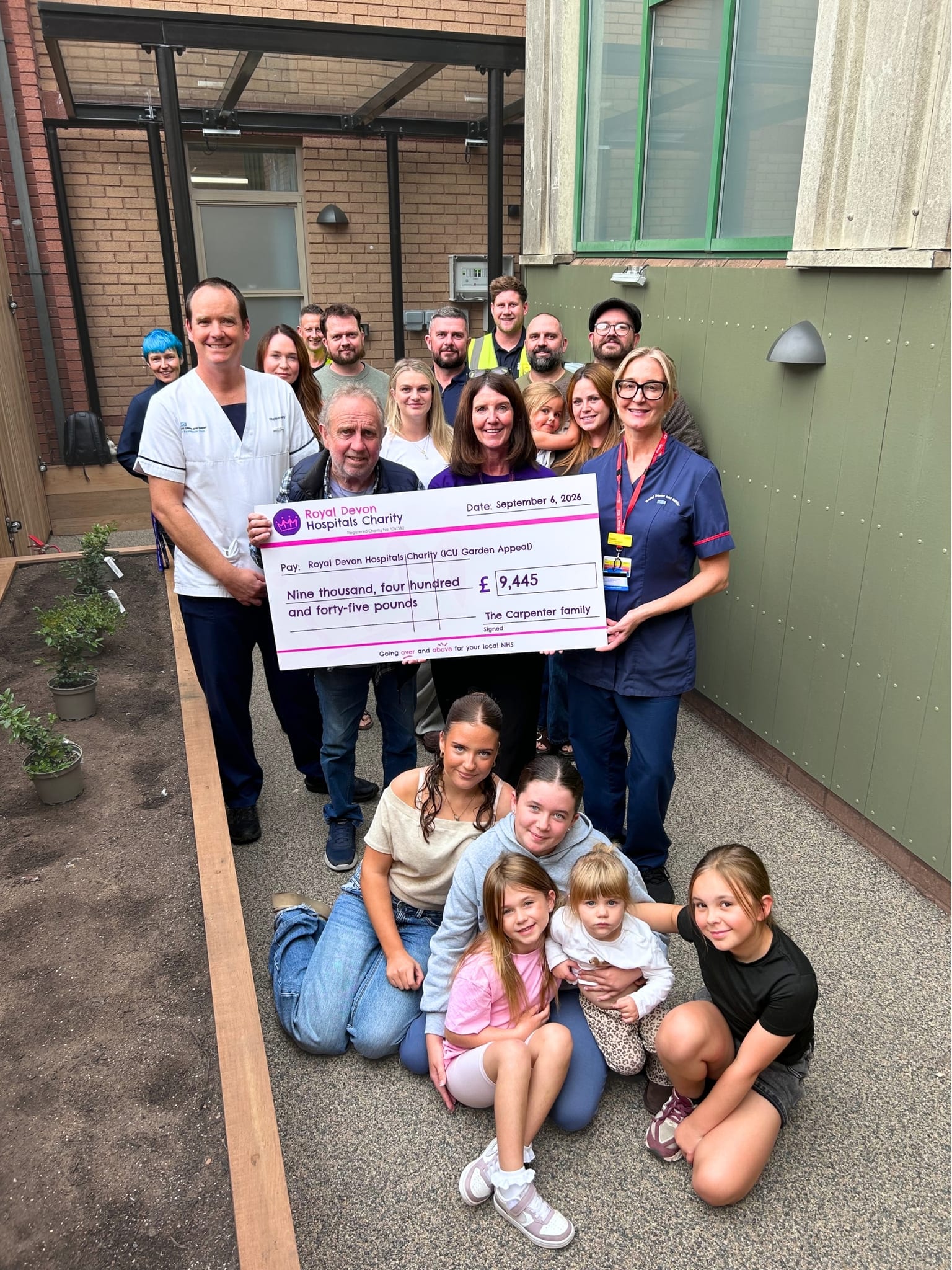 Starcross family raise £10k for Hospital ICU Garden Appeal
 25 months in jail for woman who smuggled Thai cannabis
 Homes plan lodged for former Exeter leisure centre
 A Crowdfunding campaign has launched to raise some of the funds needed to build a permanent community “village green by the sea” in Exmouth.
 Fire Service issues enforcement notice for fire safety breaches at Torbay hospital
 Unsung heroes’ who keep Exeter looking good honoured at awards
 County Council backs plan to help young people build a future in Devon
 Householders urged to fight fly-tipping by choosing reputable removers
 Multi-million pound funding boost to Devon’s road’s
 ‘Frustration’ as £5million Newton Abbot market stays shut