
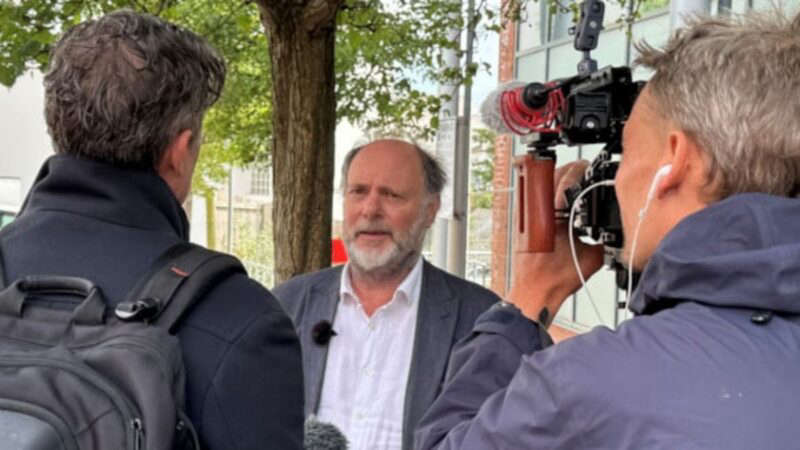
Councillor Julian Brazil, Leader of Devon County Council, has warned that recent events in Essex highlight the risks of ignoring expert financial and operational assessments when determining how councils are reorganised.
Devon County Council is calling on the Government to heed the advice of its own officials across Whitehall departments as it prepares to make a crucial decision on the future structure of local government across the county.
Councillor Julian Brazil, Leader of Devon County Council, has warned that recent events in Essex highlight the risks of ignoring expert financial and operational assessments when determining how councils are reorganised.
In Essex, government ministers chose to pursue a five-unitary authority model despite advice from officials from across Whitehall, and including the Treasury, that an alternative structure would be more financially sustainable.
Government documents and correspondence reveal that civil servants assessed a three-unitary option as meeting the Government’s criteria “more strongly than the other proposals” and as the only model likely to be “financially viable within five years”.
Despite this, ministers opted for a different approach. Essex County Council has since warned the decision risks undermining services and has launched legal action, stating that ignoring expert advice could “jeopardise the future of services to our most vulnerable adults and children”.
Councillor Brazil says the issues in Essex must serve as a clear warning as ministers close in on a decision on local government reorganisation in Devon.
Councillor Brazil said:
“The situation in Essex demonstrates exactly why it is vital that Government bases its decisions on robust, evidence-based advice.
“When expert recommendations are ignored by ministers, there is a real risk that the structures created are not financially sustainable and cannot deliver for the people who depend on them most.”

Devon County Council has consistently argued that only proposals which are resilient, financially viable and capable of safeguarding critical services should be considered. The authority’s preferred option is for a single, county-wide unitary council, alongside existing arrangements in Plymouth and Torbay, which it says would provide the scale and stability needed to protect frontline services and remain resilient to financial shocks.
By contrast, alternative proposals under consideration could see the county split into several smaller unitary councils. The council warns that such models risk creating organisations that lack the financial strength and operational capacity to deliver essential services.
Councillor Brazil added:
“We know from the evidence that smaller, fragmented authorities can struggle to remain financially viable over the long term. If Government chooses a model for Devon that does not stand up to that test, it is Devon’s residents who will pay the price.”
The Leader has previously voiced serious concerns about the potential impact of reorganisation on vulnerable residents, particularly if existing social care and children’s services are broken up.
“Breaking up vital adult and children’s services into smaller, less resilient organisations carries significant risk,” he said. “If this happens in Devon, some of the most vulnerable people we care for — both adults and children — could face a much more uncertain future.”
“An independent Commissioner has already recognised the progress being made in Devon’s children’s services and warned against disrupting that improvement. We cannot afford to put that at risk.”
The council’s leader also warned that poorly designed reorganisation could lead to reduced service quality, increased costs, and instability at a time when demand for social care and support services is already rising.
Councillor Brazil added:
“We estimated the cost of restructuring Devon’s local authority structures to be between £50m and £80m, depending on which proposal the Government selects.
“With no financial support for this huge task being offered from central government, this could impact our services to local people and there is not even any guarantee that the proposal selected by government will result in cost savings for the resulting councils or their residents.
“The government’s choice must be guided by what is sustainable financially, what protects vital services, and what is in the best interests of Devon’s communities — not by short-term or political considerations.
“We urge ministers to learn the lessons from Essex and to follow the clear advice of their own officials.”
The Government is expected to make its decision on the future structure of local government in Devon within weeks.
 Scam letters requesting payment
 Matford Brook Academy Expands Facilities for New School Year
 County Council backs renewed support for Devon farmers hit by bluetongue
 Get vaccinated and don’t visit patients if unwell, health leaders urge as flu hits local hospitals
 Severe drought declared as reservoir levels fall
 All Souls Day Festival returns to Exeter
 Starcross family raise £10k for Hospital ICU Garden Appeal
 25 months in jail for woman who smuggled Thai cannabis
 Homes plan lodged for former Exeter leisure centre
 A Crowdfunding campaign has launched to raise some of the funds needed to build a permanent community “village green by the sea” in Exmouth.
 Fire Service issues enforcement notice for fire safety breaches at Torbay hospital
 Unsung heroes’ who keep Exeter looking good honoured at awards
 County Council backs plan to help young people build a future in Devon
 Householders urged to fight fly-tipping by choosing reputable removers
 Multi-million pound funding boost to Devon’s road’s
 ‘Frustration’ as £5million Newton Abbot market stays shut