
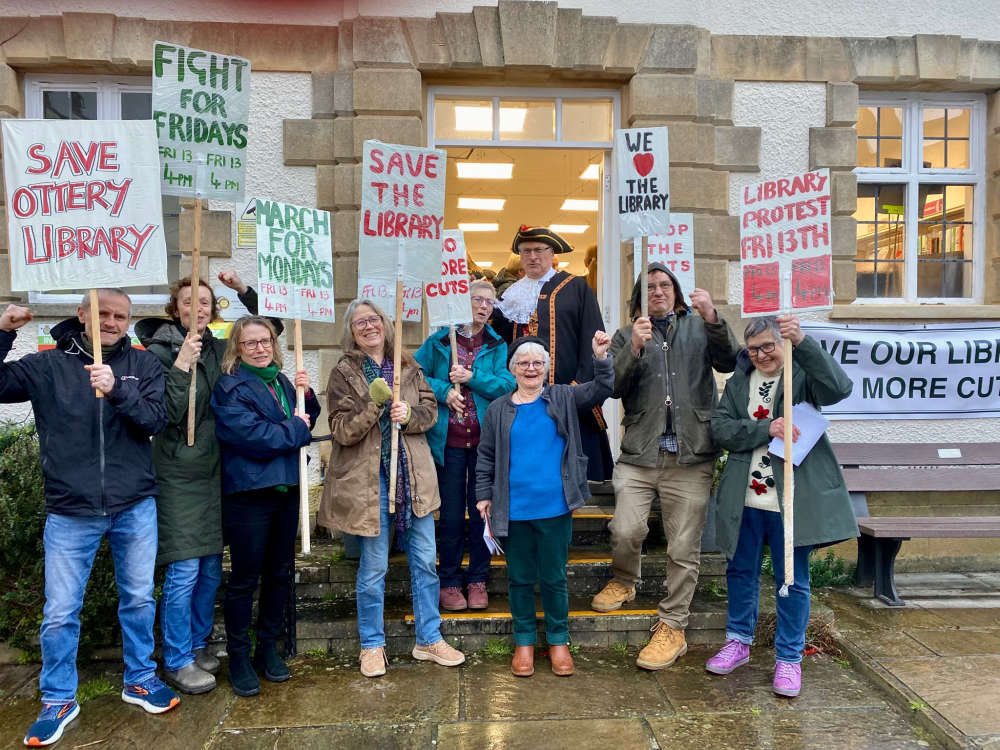
Campaigners battling to keep Devon’s library service from being reorganised with reduced opening hours could be victorious as a crunch decision over their future approaches.
More than 25,500 people responded to a consultation about the future make-up of Devon’s 50-strong library network, including proposals to slash hours by nearly a third and to group libraries together in local areas.
But a report prepared for Devon County Council’s decision-making cabinet is recommending the proposed grouping of libraries is scrapped, while one of three options for staffed opening hours suggests no cuts to the existing 1,294 weekly hours across the county.
There are two other possible staffing hours options being proposed to cabinet, though, with the first to maintain the original proposed cut of 30 per cent, which would cost the council no extra money, or a 10 per cent reduction that would cost an extra £150,000 per year.
Keeping hours as they are could cost an extra £500,000 annually.
Councillor Cheryl Cottle-Hunkin (Liberal Democrat, Torrington Rural), whose cabinet role includes overseeing libraries, said the cabinet report showed the council had “listened to the consultation responses” and thanked library staff during what she acknowledged had been a “difficult and uncertain time”.
“My preference is for library hours to remain as they are today, while making libraries stronger and more sustainable through investment, partnership with local communities and a transformation programme that can help them weather future financial pressures,” Cllr Cottle-Hunkin said.
Councillors on Devon County Council’s cabinet will be discussing the report at their meeting next week (Wednesday 20 May).
Elsewhere in the cabinet report there is a proposal to spend £400,000 on rolling out Open Plus to more Devon libraries to enable them to be accessed outside staffed hours.
A trial of the technology in Cullompton has meant the library being accessible for 29 hours extra per week without the need for extra staff. The cash to roll the scheme out more widely came from a £200,000 Arts Council Award, which was then match-funded by £100,000 from each of Libraries Unlimited and Devon County Council.
Plus there could be an extra £100,000 per year for the next two years for Devon’s Book Fund, which would take the annual total to £600,000 for this financial year and next, and library fines could be made a thing of the past.
Looking at the consultation responses, the report shows that only 7 per cent of respondents said they would have been willing to use a neighbouring library if the one in their community was closed.
Such low backing suggests that residents objected to the notion of grouping libraries in an area together, which was aimed at ensuring at least one in a local area was open during normal operating hours.
This would have involved grading libraries under different classifications, which would have dictated how many staffed hours they had. For instance, Northam Library, under the initial proposals, could have dropped from 21 hours per week to just six, with residents in Northam then expected to use another library elsewhere in their area outside of those hours.
Campaigners had feared that such a model would disadvantage the likes of the elderly and vulnerable, as well as those who rely on public transport.
And with 55 per cent of the rouighly 22,000 residents who expressed a view on this issue stating their dissatisfaction or strong opposition to the idea, the proposal looks set to be ditched.
Half also stated the proposal of reduced hours would impact their ability to visit their library, while more than two-thirds (69% per cent) supported the idea of open access libraries, community-managed libraries and greater use of volunteers.
More than 6,000 respondents said they would be willing to volunteer to help keep libraries open for longer.
Councillor Cottle-Hunkin said there had been an “amazing response” to the consultation, and that the proposals being put to cabinet showed the council was “listening”.
“We want to strengthen our libraries and develop them to make sure they are more resilient,” she said.
“We want them to be strong, especially given the potential challenges posed by local government reorganisation and any financial implications that could cause.
“If we have a strong volunteer base, technology to enable greater access, and different community groups or organisations bringing different services to libraries, that will make them more resilient.”
On the prospect of library fines being eradicated, Cllr Cottle-Hunkin said they only earned about £60,000 per year, but the cost of the time and administration to chase them probably used most of that up.
And she said they had been removed entirely in Cornwall where the experience had been “really positive”.
“It reduces barriers and encourages more people to use the library, but interestingly it also improves the atmosphere and books actually come back more easily,” she added.
The cabinet will debate the eight recommendations in the report next week.
 Scam letters requesting payment
 Matford Brook Academy Expands Facilities for New School Year
 County Council backs renewed support for Devon farmers hit by bluetongue
 Get vaccinated and don’t visit patients if unwell, health leaders urge as flu hits local hospitals
 Severe drought declared as reservoir levels fall
 All Souls Day Festival returns to Exeter
 Starcross family raise £10k for Hospital ICU Garden Appeal
 25 months in jail for woman who smuggled Thai cannabis
 Homes plan lodged for former Exeter leisure centre
 A Crowdfunding campaign has launched to raise some of the funds needed to build a permanent community “village green by the sea” in Exmouth.
 Fire Service issues enforcement notice for fire safety breaches at Torbay hospital
 Unsung heroes’ who keep Exeter looking good honoured at awards
 County Council backs plan to help young people build a future in Devon
 Householders urged to fight fly-tipping by choosing reputable removers
 Multi-million pound funding boost to Devon’s road’s
 ‘Frustration’ as £5million Newton Abbot market stays shut