

People in Exeter are being asked to make one small change to their usual journey on Clean Air Day, Thursday 18 June.
The campaign calls on the community to come together this Clean Air Day and make one less non-essential car trip which can save money and boost your physical and mental wellbeing.
The campaign is being backed by Exeter City Council, Devon County Council, Exeter College, the University of Exeter, Public Health Devon and the Royal Devon University Healthcare NHS Foundation Trust, and the Met Office.
Clean Air Day is the UK’s biggest campaign on air pollution and encourages simple changes such as walking, cycling, sharing a lift, using public transport or leaving the car at home for one short trip.
Traffic in urban areas such as Exeter is a major source of air pollution, including nitrogen dioxide. Particle pollution also comes from tyre and brake wear, as well as from wood burning, construction and agriculture.
Transport makes up around 24 per cent of Exeter’s greenhouse gas emissions - and 97% of that comes from road transport.
Air pollution is one of the UK’s biggest environmental risks to health and is linked to heart disease, stroke and breathing problems.
And while air quality in Exeter has improved over time and is better than in many parts of the country, polluted air still affects people’s health.
Exeter’s estimated mortality rate linked to particulate air pollution is 4.2%, compared with 4.3% across the South West and 5.3% nationally.
Children, older people and those with heart and lung conditions are most affected, with lower-income communities also at greater risk.
Research also suggests people can sometimes be exposed to more pollution sitting in traffic than walking or cycling nearby.
Cllr Ruth Williams, Exeter City Council’s Deputy Leader and Lead Councillor for City Management, said: “Clean Air Day is a great opportunity for everyone to consider using active travel, like walking and cycling, wherever this is possible.
“As well as reducing harmful pollution, we also know this is good for people’s physical and mental health.
“Using public transport instead of a private car, where this is possible, also contributes to a reduction in pollution and congestion. I welcome the fact that air quality is improving in Exeter, and we can all play a part in ensuing that this continues.”
Exeter City Council is preparing a Draft Air Quality Strategy for Exeter, which will go out for public consultation later this summer.
Professor Stewart Barr, an environmental social scientist specialising in public responses to environmental issues, said: “Research shows the combined benefits of walking, cycling and wheeling for both the environment and personal health.
“These are everyday travel habits that can help cut congestion, improve local air quality and tackle climate change, while also boosting physical and mental wellbeing through exercise and greater connection with the world around us.”
Steve Brown, Devon’s Director of Public Health, said: “This is not about telling people how they should travel. It is about asking whether there is one trip they could do differently that day.”
“That could mean walking, cycling, sharing a lift or using public transport. Cleaner air benefits everyone, especially children, older people and people with existing health conditions.”
 Scam letters requesting payment
 Matford Brook Academy Expands Facilities for New School Year
 County Council backs renewed support for Devon farmers hit by bluetongue
 Get vaccinated and don’t visit patients if unwell, health leaders urge as flu hits local hospitals
 Severe drought declared as reservoir levels fall
 All Souls Day Festival returns to Exeter
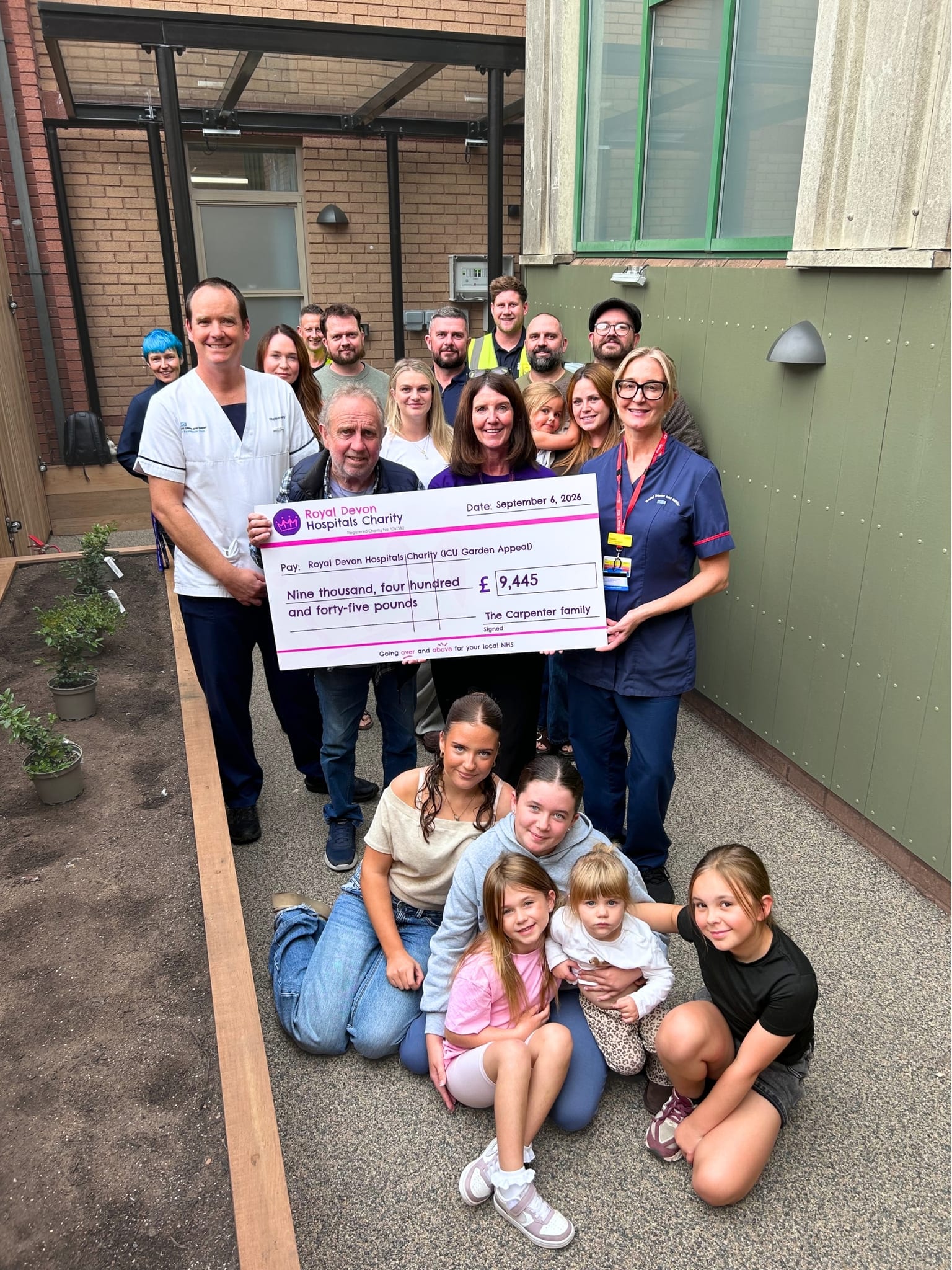 Starcross family raise £10k for Hospital ICU Garden Appeal
 25 months in jail for woman who smuggled Thai cannabis
 Homes plan lodged for former Exeter leisure centre
 A Crowdfunding campaign has launched to raise some of the funds needed to build a permanent community “village green by the sea” in Exmouth.
 Fire Service issues enforcement notice for fire safety breaches at Torbay hospital
 Unsung heroes’ who keep Exeter looking good honoured at awards
 County Council backs plan to help young people build a future in Devon
 Householders urged to fight fly-tipping by choosing reputable removers
 Multi-million pound funding boost to Devon’s road’s
 ‘Frustration’ as £5million Newton Abbot market stays shut