A funding bid is being put together to secure cash to develop a fungus that could help battle a future bluetongue outbreak as the virus blights the county.
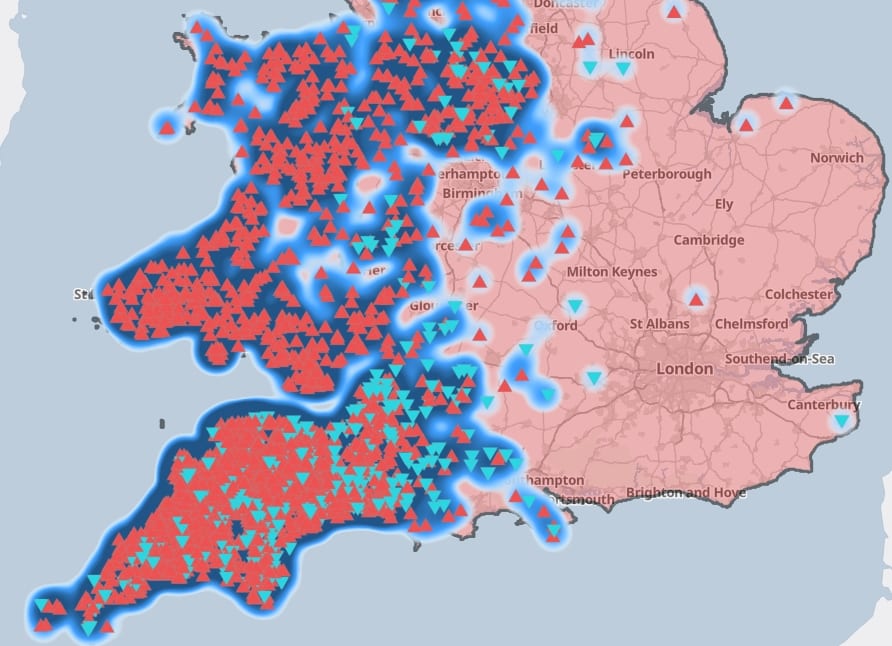
Devon has been the national epicentre of bluetongue, with more than four in every 10 of the 2,915 cases across England being recorded in the county.
The virus, which can be fatal to livestock or lead to infertility in those that survive, is carried by midges, which have flourished amid the warm and dry weather.
Now, there is an effort to apply for funding from ADOPT (Accelerating Development of Practices and Technologies) funded by the Department for Environment, Food and Rural Affairs (Defra) and supported by Innovate UK.
Councillor Louise Wainwright (Liberal Democrat, Salcombe), who is the vice-chair on the farms estate committee and has a background in the commercialisation of biological controls of pests and diseases, is helping steward the bid.
While she stressed that vaccination “still remains the absolute must-do”, a biopesticide strategy could be complimentary.
“We have got an extreme situation here, so the first approach to solving this problem involved asking why nobody is doing anything about the biological control of the midge vector,” she said.
Cllr Wainwright said chemicals had not been used against the midges that spread bluetongue because they were “harmful to the environment and non-target species”.
She added that she discovered that research had already been conducted 15 years ago showing how a naturally occurring fungus could kill 98 per cent of the larvae and adult midges.
Work by the Pirbright Institute and Swansea University had investigated the use of Metarhizium, a fungi known for its ability to infect and kill various insects.
She said the specialist group of fungi were known to be environmentally friendly without harmful effects on wildlife or humans.
“They would make an ideal candidate for a more robust solution to the bluetongue problem,” she said.
“By reducing the midge population, it might be possible to reduce the need to develop new vaccines when the virus mutates.”
Cllr Wainwright added that it was “important to underline that even the Pirbright scientists are concerned that this must never undermine the message around vaccination”.
“But we are bringing together a few players, including professor Tariq Butt, from Swansea University, a vet and farmers to look at developing something,” Cllr Wainwright said.
She stated that the funding bid could be made by Councillor Cheryl Cottle Hunkin (Liberal Democrat, Torrington Rural) who is the cabinet member for rural affairs and a farmer.
The grant has to be applied for by a farmer, because of the requirement for any projects to be farmer-led.
Cllr Wainwright added that the aspiration would be to harness Metarhizium or something similar to control the midge populations, with a possible side-benefit being its use as a biofertiliser.
“If we can make an economic argument for using this fungus to both control the midge vector and hopefully act as a biofertiliser for pasture to improve grazing for sheep and cattle, that gives the bid added support,” she said.
“This means there is light at the end of the tunnel.”
 Save water now to protect Devon’s most vulnerable residents
 Spotlight on Exeter homeless support groups
 Police officers receive specialist training to tackle machinery theft
 More consistent planning decisions under new rules
 People asked to think of others when letting off fireworks
 UPDATE | investigation into death of a woman in Torquay
 Heritage Fund backs plans for a Wild About Seaton future
 Still time to enter tree photography competition
 Devon-wide council overhaul ‘withdrawn’ as government rethinks
 Help shape Exeter’s budget by taking part in survey
 Assurances sought over Teignmouth lido future
 Exeter part of largest genetic study on Alzheimer’s identifying new DNA risks
 How to stay safe during Halloween
 Murder investigation launched in Torquay
 Shop local with half price parking this winter
 Storms see Waterways team called into action on Exe Estuary