
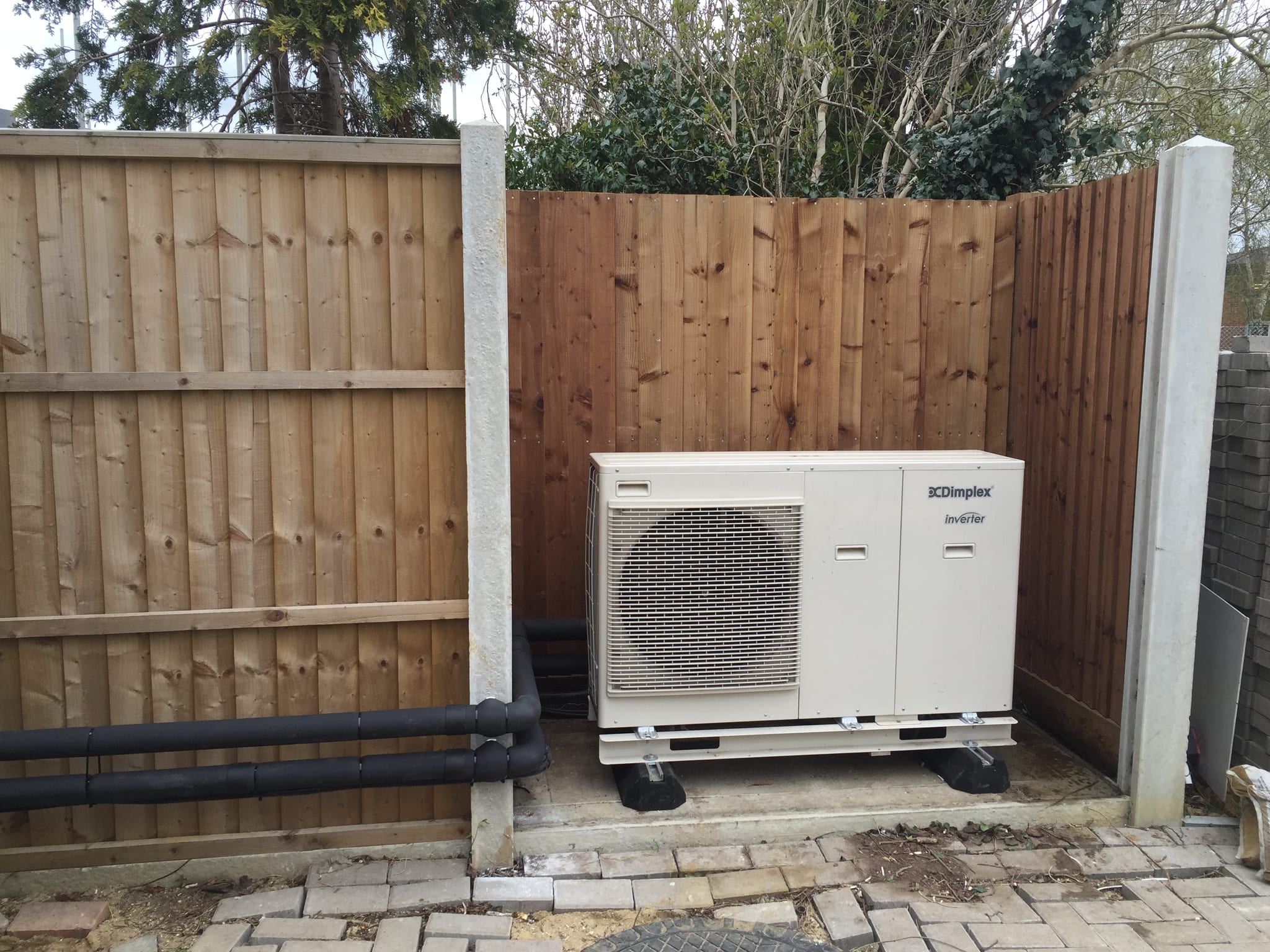
Devon residents remain confused about whether they need planning permission for an increasingly popular home improvement.
A rising number of households appear to be considering heat pumps, partly encouraged by grant funding from the government that is available for some properties.
Government data shows there were less than 7,500 air source heat pump installations in 2018 across the UK, rising to 53,263 last year.
And in 2026 until the end of June, the South West installed the second-largest number of heat pumps at 14 per cent of the 20,895 UK-wide, just behind the 18 per cent for the South East.
Various rule changes have altered what most home owners need to do when getting a heat pump installed, and typical installations need no planning applications because they are considered ‘permitted development’ in planning terms.
“The rules were relaxed in May 2025, when the requirement to keep the outdoor unit a metre from the boundary was dropped,” said James Stalker, an MCS-certified heat pump installer and NAPIT (National Association of Professional Inspectors and Testers) MCS assessor based in Exmouth.
“Noise is what catches people out. The unit has to come in at 37 decibels or less, one metre outside a neighbour’s door or window to a habitable room.”
Mr Stalker said residents considering a heat pump should secure a noise calculator for the chosen heat pump spot, as well as room-by-room heat loss figures, a radiator schedule, and the design flow temperature.
Some councils confirmed residents were contacting them about heat pump installations, even though there were an increasing number of cases whereby no permission was required.
“We do still get people making enquiries about heat pumps but this can be for a variety of reasons, such as it being part of a wider project with other elements that may need permission or they simply want something in writing from us for assurance that they don’t need permission,” a spokesperson for East Devon District Council said.
“Clearly there remain some instances where permission is still needed such as in the case of listed buildings and in some cases in conservation areas, as well as when they exceed 1.5 cubic metres in size or noise criteria.
“These requirements can be confusing, and we are happy to provide advice.”
Mr Stalker agreed that listed buildings and road-facing walls in a conservation area would need permission first.
In terms of more standard installations, he noted that the noise calculation was important, and that another rule change in May this year meant it had to be measured via a specific calculation, known as MCS 020 a).
“A typical heat pump at a house in England needs no planning application,” he said.
“People get caught out by noise as the outdoor unit has to pass a calculation for the nearest neighbour’s window.”
The government’s Warm Homes Plan, published in January, is targeting 450,000 heat pump installations per year by 2030.
 Trust overseeing closure-risk school pledges to ‘explore ways’ to bolster pupil numbers
 Exeter achieves Gold for social care nursing education
 Dangerous overtaking of cyclists caught on camera as Operation Snap surpasses 30,000 submissions
 Women and girls asked to map safety concerns across Exeter
 Progress made in reducing drug-related deaths, but more lives must be saved
 Major water summit first step on journey to Devon’s water future
 Andy Burnham under fire as Brixham fish fleet faces crisis
 South West has lowest rate of antibiotic-resistant infections in England, but resistance is still a concern
 Serious injury collision, Colaton Raleigh
 Rogue landlords face tougher action under new East Devon enforcement policy
 Exmouth Nursery Praised for Its Warm and Nurturing Care
 South West Water lifts the lid on the hidden fat, oil and grease found beneath Devon businesses this summer
 University of Exeter wins prestigious Green Gown Award for city-centre nature recovery project
 Demand for action from Milburn Report
 Heating oil up 85% in nine months: Devon Communities Together urges rural households to seek free winter support
 Devon trains to get satellite wi-fi